
Understanding the Differences
When people hear the words seaweed, seamoss, and sargassum, they often assume they are the same thing. In reality, each has unique characteristics, uses, and impacts—especially here in Belize, where our marine ecosystems are central to our livelihoods and food security. At the Belize Women’s Seaweed Farmers Association (BWSFA), we believe that knowledge empowers communities. Understanding these differences helps us better appreciate the resources of our ocean and make sustainable choices.
1. Seaweed (Eucheuma & Kappaphycus)
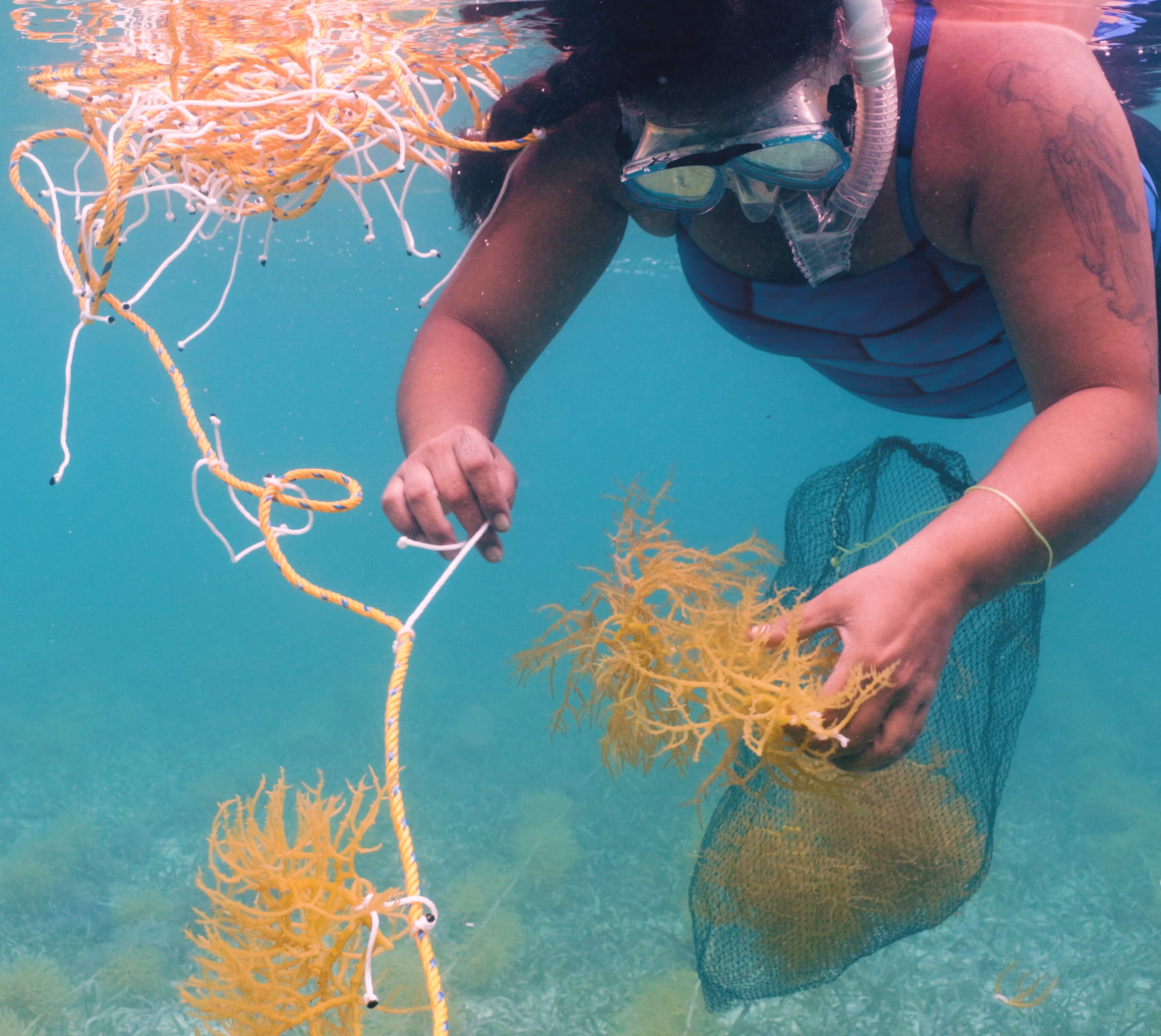
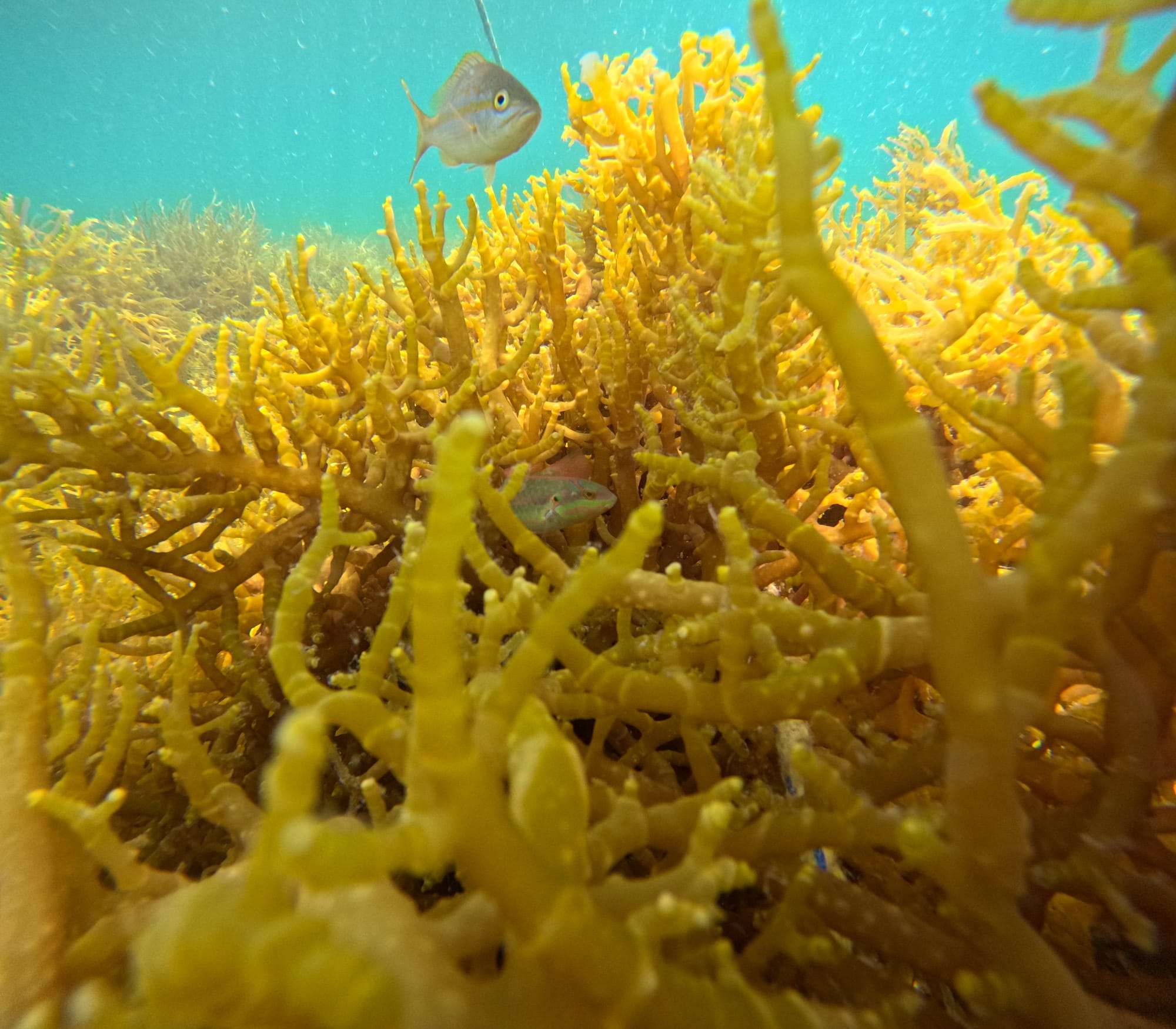
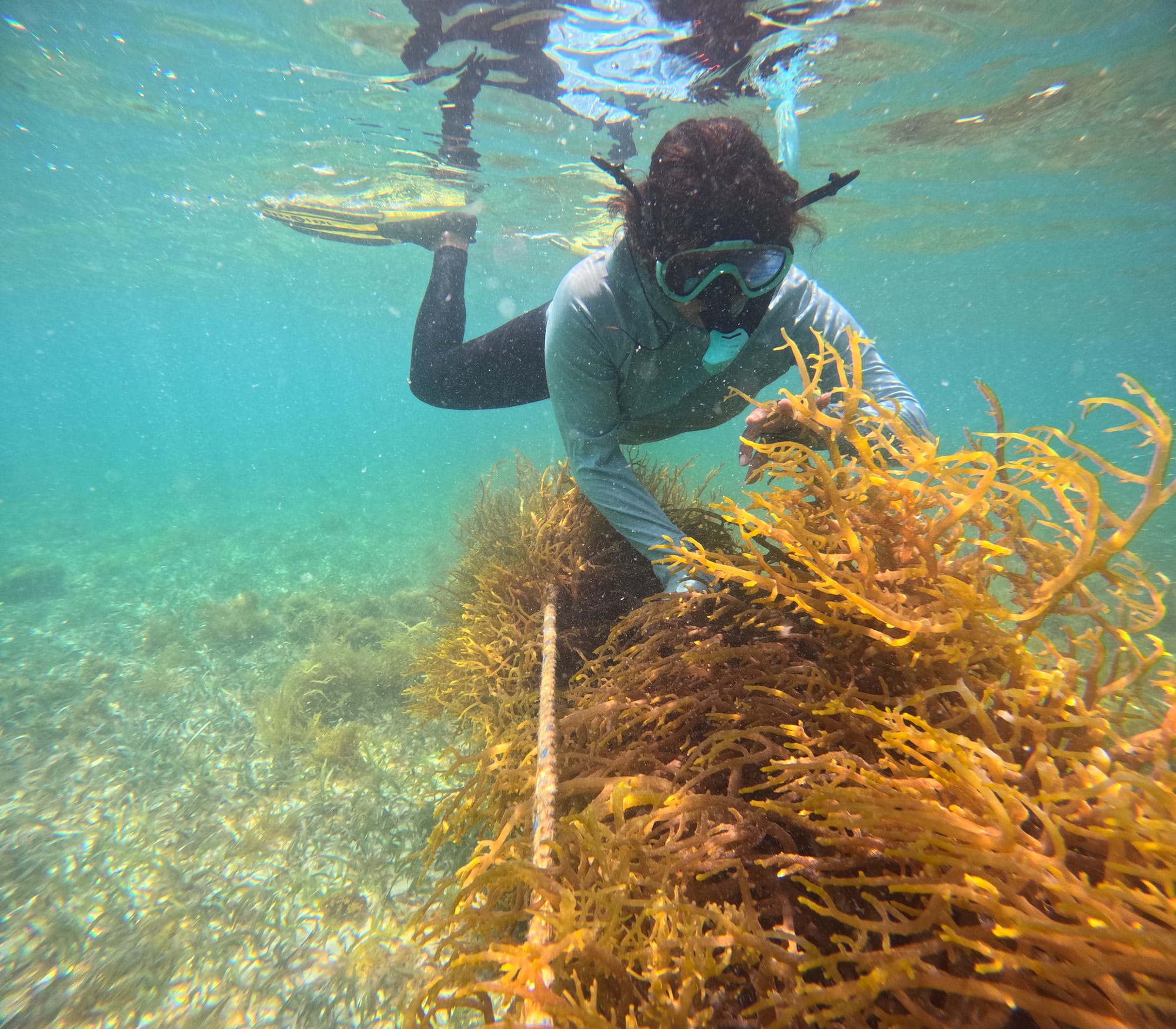
- What it is: Seaweed is a broad term that refers to a variety of marine algae. In Belize, the main types we cultivate are Eucheuma and Kappaphycus.
- How it’s used: Belizean seaweed is considered a superfood that is highly valued for food and beverages, especially the famous Belizean seaweed drink. It is also used in cosmetics, health supplements, and even pharmaceuticals.
- Why it matters: Seaweed farming provides sustainable income for women, men, and youth in coastal communities. It is environmentally friendly, supports marine biodiversity, and strengthens climate resilience.
2. Seamoss (Chondrus crispus & others)
- What it is: Seamoss, sometimes called Irish moss, is another type of red algae, different from the Belizean seaweed we farm. It grows naturally in cooler waters of the Atlantic—like Ireland, Jamaica, and St. Lucia.
- How it’s used: Globally popular for its nutritional content, seamoss is rich in minerals like iodine, calcium, and magnesium. It’s often sold in gel form as a health supplement.
- Why people confuse it with seaweed: Both seaweed and seamoss are algae and look somewhat similar when dried. However, seamoss is not traditionally grown or harvested in Belize.
3. Sargassum
- What it is: Sargassum is a type of free-floating brown seaweed found in the Atlantic Ocean. Unlike farmed seaweed or seamoss, it drifts in large mats and often washes ashore.
- Impact on communities: In recent years, sargassum has become a major challenge for coastal areas, including Belize. While it provides habitat for marine life at sea, when it accumulates on beaches it can harm tourism, marine ecosystems, and local livelihoods.
- Uses (emerging): Researchers are exploring ways to use sargassum for fertilizer, packaging, and other products—but large-scale, safe use is still developing.
Key Takeaways
- Seaweed = Farmed in Belize, provides food, income, and sustainability.
- Seamoss = Popular internationally for health supplements but not locally grown.
- Sargassum = Natural Ocean algae with both benefits and challenges, especially when it reaches our shores.
Why This Matters for Belize
For the women and communities of BWSFA, seaweed is more than just a marine plant—it represents livelihood, stewardship, and resilience. By understanding the differences between seaweed, seamoss, and sargassum, we can make informed choices that support sustainable industries, healthy oceans, and stronger communities.
Seaweed is not just the future of food—it is the future of our people.